Unofficial Website
Unofficial Website

Musical evenings of yesteryear

Discover the enchanting Schoenbrunn Orangery: a hidden gem of Vienna's imperial elegance

A fascinating city like no other, Vienna is renowned for its elegant refinement. Its history is divided between empire and artistic heritage, concealing countless wonders. The Habsburgs, with their imperial presence, still linger among the streets of the city, surrounded by prestigious palaces, famous museums, and unique cafés. Vienna is ideal for those who adore culture, offering a transition from classical opera to modernism; every corner has its own story to tell. The architectural beauties are certainly no less remarkable: Schönbrunn Palace, the Hofburg Palace, the Sissi Museum, and St. Stephen’s Cathedral. If you are ready to embrace a delicate setting with interesting local culinary flavors and create unforgettable new experiences, then you must visit Vienna immediately! Here are some other attractions to see.

At the heart of the picturesque Schönbrunn Palace, which is one of the most iconic imperial residences in Europe, you will find one of the most fascinating yet lesser-known structures: the Orangery of Vienna. This elegant historic building, located on the eastern side of the vast Baroque gardens, testifies to the love of nature and the taste for magnificence of the Habsburg court. The Orangery is now a must-see attraction, both for its history and for the cultural events that take place there regularly.

Its construction dates back to the period between 1754 and 1755 at the behest of Empress Maria Theresa. Initially conceived as a monumental greenhouse intended to protect exotic plants, particularly citrus fruits, during the harsh Viennese winters, the building is one of the longest of its kind in Europe, extending over 180 meters. Its glass and stone structure, along with the state-of-the-art underground heating for the time, allows the Orangery to maintain a favorable climate even during the coldest months.
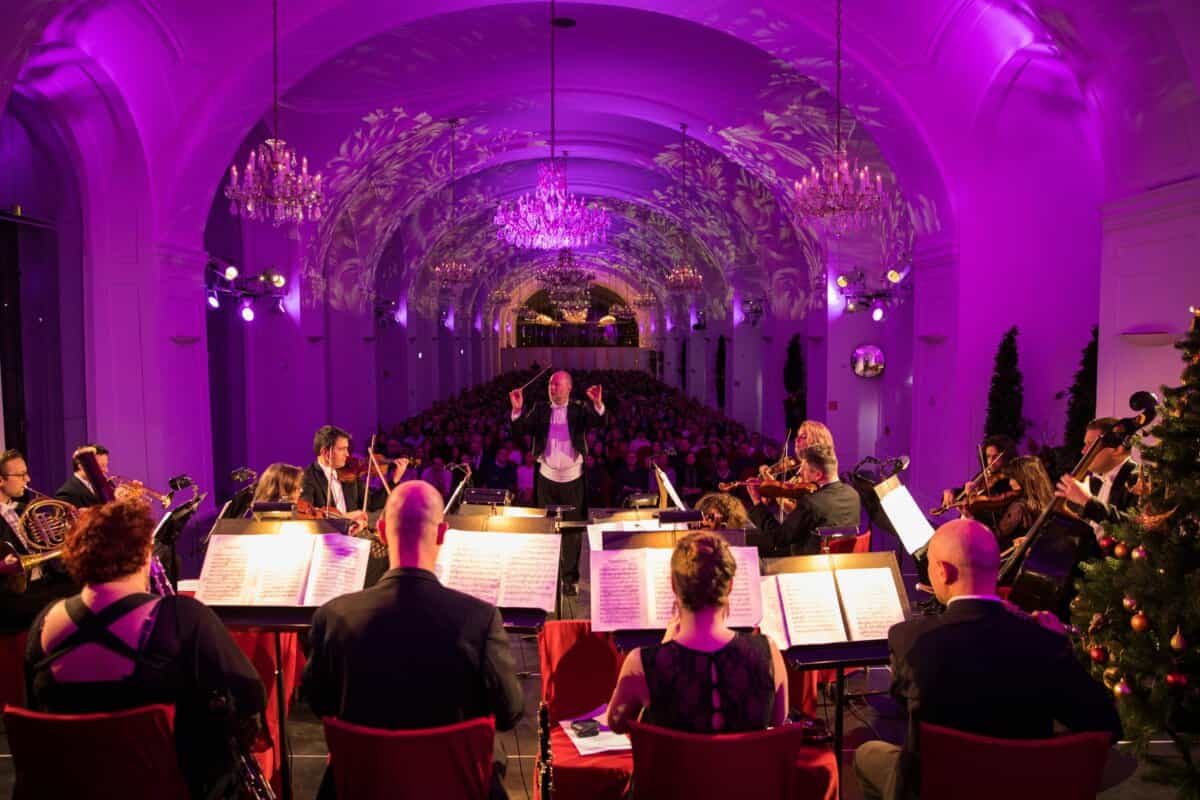
Orchestra performing in elegant, purple-lit hall.

However, it is not just an ideal place for plants; it also serves as a venue for exclusive events, court balls, and private performances. In 1786, the Orangery hosted a historic musical competition between two giants of music: Mozart and Salieri. As a result, the venue has acquired a legendary atmosphere that continues to attract musicians and history enthusiasts from around the world.

Today, the Orangery has been perfectly restored and hosts evening concerts, often dedicated to Viennese classical music with performances of works by Mozart and Strauss in an intimate and refined setting. Sitting among the historic columns of the building, immersing oneself in the music that once entertained the imperial family, is a unique experience that weaves together history, emotion, and art.

Throughout the year, the Orangery hosts cultural events, receptions, and exhibitions. This versatile space makes it the perfect location for such occasions while respecting the historical elegance of the site. Visiting the structure, even just from the outside during a walk in the gardens, allows one to appreciate the grandeur of the Baroque design and the care with which the natural and architectural environment were harmonized. For those wishing to thoroughly explore Schönbrunn Palace, the Orangery is an ideal complement to the tour of the palace, the zoo, and the Gloriette. It is always advisable to book concert tickets in advance, as they are highly appreciated by tourists and locals alike. In short, it is a dream visit that should not be missed, where the mind soars and the body is enchanted, feeling suspended in the beauty of a time that once was.

SHOW MORE

Schoenbrunn Palace: self-guided tour + concert at the Orangery

Duration: 5h
https://www.tiqets.com/en/schonbrunn-palace-tickets-l145516/?partner=schonbrunn-palace.com

Schoenbrunn Palace and Gardens: Admission + guided tour

Duration: 2h – 3h 30min | Max. number of persons: 25
https://www.tiqets.com/en/schonbrunn-palace-tickets-l145516/?partner=schonbrunn-palace.com

Schonbrunn Palace and Gardens: Skip The Line ticket and private guided tour

Duration: 2h 30min | Guide-guide: Italian, German, English, French, Polish, Russian, Spanish
https://www.tiqets.com/en/schonbrunn-palace-tickets-l145516/?partner=schonbrunn-palace.com

Booking Info

Opening Hours

Schönbrunn Palace is open to the public every day of the year, including holidays, making it a consistently accessible destination for visitors. The opening hours vary slightly depending on the season. Generally, during the winter hours (from November to March), the palace opens at 8:30 a.m. and closes at 5:30 p.m. In the spring and summer months, from April to October, closing time is extended to 6:30 p.m., providing more time for visits. Some areas, such as the gardens or secondary attractions (like the Gloriette or the maze), may have different hours, so it is always advisable to check for updates on the official website. Ticket counters usually close 45 minutes before the official closing time to allow visitors to complete their tour. The Carriage Museum and Schönbrunn Zoo also follow a specific schedule. It is helpful to purchase tickets in advance to avoid queues, especially during peak periods.

Location

Schönbrunn Palace is located in Vienna, the capital of Austria, in the quiet district of Hietzing, west of the city center. The exact address is Schönbrunner Schloßstraße 47, and it can easily be found on all tourist maps of the city. It is one of the most visited attractions in Europe, set within a vast green area featuring the palace, Baroque gardens, fountains, greenhouses, mazes, and a stunning view from the Gloriette hill. The area is well-served and tranquil, ideal for a day of exploration away from the hustle and bustle of the historic center while still being well-connected. Surrounding the palace are cafés, restaurants, and shops, as well as other secondary attractions like Schönbrunn Zoo, the oldest in Europe. Numerous entrances and excellent signage make access simple from any direction. The area is completely pedestrianized and perfect for relaxing walks before or after visiting the interiors.

How to Get There

Reaching Schönbrunn Palace is very easy thanks to Vienna’s efficient public transportation network. The quickest way is by subway: Line U4 connects the historic center directly to Schönbrunn in just a few minutes. Simply get off at the “Schönbrunn” stop and walk for about 5 minutes to the main entrance. Alternatively, several tram lines can be used, including numbers 10 and 60, which stop nearby. City buses also cover the area well, with lines 10A, 56A, and 56B being among the most frequent. For those arriving by car, there are paid parking spaces in the vicinity, although they can become crowded during peak tourist months. A taxi or shuttle service is also available from various points in the city. For those staying in Vienna for a few days, purchasing a Vienna City Card can facilitate travel and may include discounts for entry.

Best Time to Visit

Schönbrunn Palace is captivating at any time of year, but there are seasons that make the visit particularly enjoyable. Spring, from late March to May, is perhaps the ideal time: the gardens bloom with flowers, the weather is mild, and the longer days allow for a leisurely exploration of the entire complex. Autumn, especially in September and October, also offers a charming atmosphere with the warm colors of the leaves and still pleasant temperatures. Summer is perfect for those who want to take advantage of sunny days and attend events or concerts in the gardens, but one should be prepared for larger crowds. Winter, while colder, presents the charm of Christmas markets set up in the palace courtyard and a more peaceful visit to the interiors. Each season has its own appeal; the choice depends on whether one prefers lush greenery, a romantic atmosphere, or winter tranquility.

Duration of the Visit

The duration of a visit to Schönbrunn Palace can vary based on personal interests and the type of ticket purchased. To see just the imperial apartments and the main interiors of the palace, plan for about 1.5 to 2 hours. However, to experience a complete visit that includes the Baroque gardens, the Carriage Museum, the Gloriette, the maze, and the zoo, it is advisable to dedicate at least half a day. Many visitors prefer to spend the entire day there, alternating between cultural visits and relaxing moments in the park’s cafés. For those traveling with children, Schönbrunn Zoo is a must-see and can take 2 to 4 hours. Some combined tours also offer priority access and guided paths, which help optimize time. In any case, the advice is to take your time: Schönbrunn is a place rich in history, art, and nature that deserves to be discovered at a leisurely pace.

Accessibility

Schönbrunn Palace is largely accessible to individuals with reduced mobility, thanks to a series of measures and facilities designed to ensure a complete experience for everyone. The main interiors of the palace are equipped with elevators and ramps that allow visits to the imperial rooms without architectural barriers. The gardens, although some areas have gravel paths or slight inclines, are still navigable with strollers and walkers, especially along the main avenues. Accessible restrooms are available, as well as designated parking spaces near the entrance. Additionally, staff are trained to assist those in need. The castle’s official website provides detailed and updated information on the accessibility of each area, including the zoo, the Carriage Museum, and the Gloriette. Those requiring specific aids can also book additional services in advance, such as wheelchairs or accessible guided tours.

SHOW MORE

Location

Useful information for your visit

Schoenbrunn Palace is open daily, including holidays. Hours vary seasonally: in winter (November-March) it opens at 8:30 a.m. and closes at 5:30 p.m., while in spring and summer (April-October) it closes at 6:30 p.m. Some areas, such as the gardens and secondary attractions, may have different hours, so it is advisable to check the official website. Ticket offices close 45 minutes before closing time. The Carriage Museum and Schönbrunn Zoo also follow specific timetables. It is advisable to buy your tickets in advance to avoid queues at peak times.
Schönbrunn Palace is located in Vienna, the capital of Austria, in the quiet district of Hietzing, west of the city center. The exact address is Schönbrunner Schloßstraße 47, and it can easily be found on all tourist maps of the city. It is one of the most visited attractions in Europe, set within a vast green area featuring the palace, Baroque gardens, fountains, greenhouses, mazes, and a stunning view from the Gloriette hill. The area is well-served and tranquil, ideal for a day of exploration away from the hustle and bustle of the historic center while still being well-connected. Surrounding the palace are cafés, restaurants, and shops, as well as other secondary attractions like Schönbrunn Zoo, the oldest in Europe. Numerous entrances and excellent signage make access simple from any direction. The area is completely pedestrianized and perfect for relaxing walks before or after visiting the interiors.
Reaching Schönbrunn Palace is very easy thanks to Vienna’s efficient public transportation network. The quickest way is by subway: Line U4 connects the historic center directly to Schönbrunn in just a few minutes. Simply get off at the “Schönbrunn” stop and walk for about 5 minutes to the main entrance. Alternatively, several tram lines can be used, including numbers 10 and 60, which stop nearby. City buses also cover the area well, with lines 10A, 56A, and 56B being among the most frequent. For those arriving by car, there are paid parking spaces in the vicinity, although they can become crowded during peak tourist months. A taxi or shuttle service is also available from various points in the city. For those staying in Vienna for a few days, purchasing a Vienna City Card can facilitate travel and may include discounts for entry.
Schönbrunn Palace is captivating at any time of year, but there are seasons that make the visit particularly enjoyable. Spring, from late March to May, is perhaps the ideal time: the gardens bloom with flowers, the weather is mild, and the longer days allow for a leisurely exploration of the entire complex. Autumn, especially in September and October, also offers a charming atmosphere with the warm colors of the leaves and still pleasant temperatures. Summer is perfect for those who want to take advantage of sunny days and attend events or concerts in the gardens, but one should be prepared for larger crowds. Winter, while colder, presents the charm of Christmas markets set up in the palace courtyard and a more peaceful visit to the interiors. Each season has its own appeal; the choice depends on whether one prefers lush greenery, a romantic atmosphere, or winter tranquility.
The duration of a visit to Schönbrunn Palace can vary based on personal interests and the type of ticket purchased. To see just the imperial apartments and the main interiors of the palace, plan for about 1.5 to 2 hours. However, to experience a complete visit that includes the Baroque gardens, the Carriage Museum, the Gloriette, the maze, and the zoo, it is advisable to dedicate at least half a day. Many visitors prefer to spend the entire day there, alternating between cultural visits and relaxing moments in the park’s cafés. For those traveling with children, Schönbrunn Zoo is a must-see and can take 2 to 4 hours. Some combined tours also offer priority access and guided paths, which help optimize time. In any case, the advice is to take your time: Schönbrunn is a place rich in history, art, and nature that deserves to be discovered at a leisurely pace.
Schoenbrunn Palace is largely accessible to people with reduced mobility, thanks to facilities such as lifts and ramps for visiting the imperial rooms. The gardens, although they have some areas with gravel or slopes, are passable with wheelchairs and walkers along the main avenues. Accessible toilets and reserved parking spaces are available. Staff are trained to offer assistance, and the official website provides detailed information on the accessibility of the various areas, including the zoo and the Carriage Museum. Specific aids such as wheelchairs and accessible guided tours can be booked in advance.

History

The Orangery of Schönbrunn is one of the most fascinating and historically significant structures within the Schönbrunn Palace complex in Vienna. Built between 1750 and 1755, the Orangery was designed by architect Johann Ferdinand Hetzendorf von Hohenberg to house tropical plants and citrus fruits during the winter months, reflecting the era’s interest in botany and gardening.

The architecture of the Orangery is a beautifully preserved example of Baroque style, with an elegant façade and large arched windows that allow natural light to illuminate the interior spaces. Originally, the building served as a refuge for the most delicate plants, but over time it also became an important venue for events and celebrations of the imperial court.

In the 19th century, the Orangery became a center for social and cultural activities. Under the reign of Franz Joseph, it was used to host concerts, balls, and receptions, attracting nobles and dignitaries from across Europe. The surrounding gardens, with their splendid floral displays, enhanced the festive and celebratory atmosphere.

In addition to its social function, the Orangery also played a practical role in imperial gardening. Citrus fruits, such as lemons and oranges, were cultivated in pots and brought inside during the winter to protect them from the cold. Today, visitors can still admire some of the historical plants, which testify to the botanical tradition of the Austrian court.

In recent years, the Orangery has been restored and reopened to the public as a museum and event space. It hosts temporary exhibitions and art shows, making it a dynamic place that combines history with contemporary culture. Visitors can stroll among the lush plants and appreciate the architectural beauty of the building, immersing themselves in the charm of Vienna’s imperial history.

Today, the Orangery of Schönbrunn is not only a place of natural beauty but also a symbol of Austria’s rich cultural heritage, where history and botany meet to offer a unique experience to all visitors.

Show more

Reviews

Gallery

Tips