Imperial panorama from above
Discover the Gloriette: a neoclassical gem overlooking Vienna's Imperial splendour
A place of eternal charm, where history and culture come together in perfect harmony. Walking through its pathways feels like diving into an elegant scene, among sumptuous palaces, historic cafés, and squares that narrate years of beauty and art. However, Vienna is primarily the City of Music. From the luxury of the Habsburg court to contemporary music, Austria’s capital has seen the birth and hosted the most famous figures in history, including Mozart, Beethoven, Schubert, Strauss, and Haydn. These musical giants worked in Vienna, leaving an indelible mark that has endured to this day in concert halls, streets, and avenues.
At first glance, it appears almost suspended, a kind of relic set among the clouds: the Gloriette is not just a building but a literal experience. Positioned on a hill that overlooks the entire Schönbrunn Palace park in Vienna, this elegant stone pavilion with columns and arches stands as a hymn to Neoclassical harmony, yet with a profoundly imperial soul.
Its construction dates back to 1775 at the behest of Empress Maria Theresa, so much so that the Gloriette was meant to be the focal point and culminating feature of the Baroque garden. Its significance is much more symbolic, representing the glory of the Habsburg monarchy and the timeless essence of the empire. Its orientation was perfectly studied to capture the morning light and the amber glow of sunset, almost as if it were a link between time and royalty.
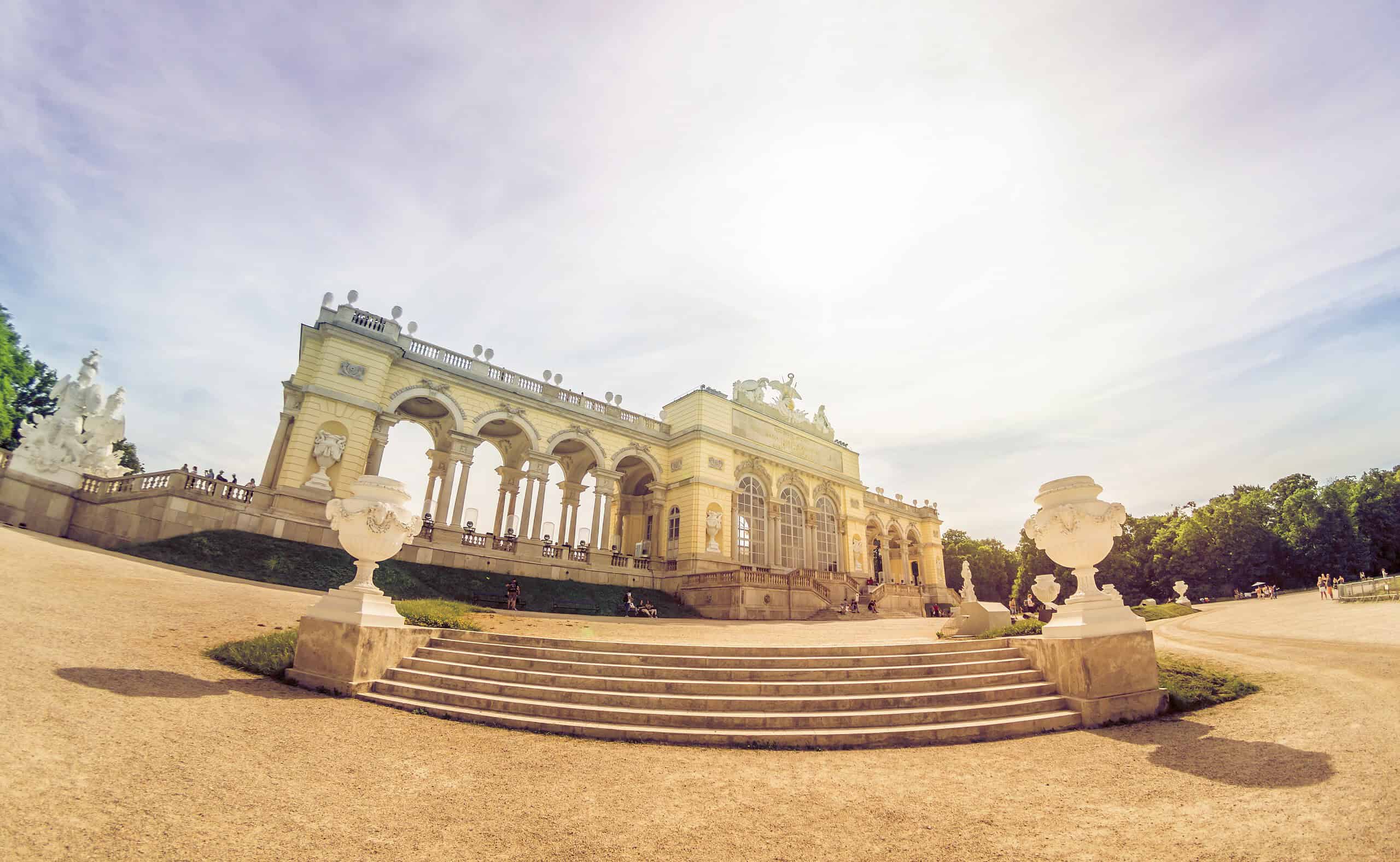
Architecturally, the structure is a masterpiece of symmetry and visual lightness. Ten enormous central arches are flanked by side wings, along with Doric columns supporting a flat roof, all crowned by an imperial eagle and stone military trophies. The balance between visual transparency and monumentality creates the optical effect of a weightless, almost floating loggia, sharply contrasting with the solid grandeur of the palace below.
One lesser-known curiosity is that the Gloriette was also used as a summer dining room, a venue for concerts, and later as a military observation point. Today, it hosts a refined café with a panoramic view: enjoying an Apfelstrudel while taking in the magnificent landscape of Vienna, Schönbrunn Palace represents not just a pause but also a sort of historical connection. The interior is equally deserving of attention, featuring enormous, bright windows, polished marbles, and elegant decorations that preserve the aristocratic aura of the past.
The true magic is captured when ascending to an upper terrace. Here, the view unfolds like a theater curtain: below are the geometric gardens, joyful fountains, the imperial yellow palace, and further away, the city with its characteristic roofs and bell towers. On clear days, one can even glimpse the hills of the Wienerwald in the distance, the most thrilling viewpoint in Vienna.
The Gloriette is a place where time seems to stand still, an observation point removed from everyday reality. It is not merely a monument but a declaration of infinite beauty, meant to be contemplated and to inspire contemplation in precious silence. Schönbrunn is the imperial heart of Vienna, while the Gloriette is its soul, gazing toward the horizon.
Schoenbrunn Palace and Gardens: Skip the Line Ticket + Guided Tour
Schönbrunn Palace: Skip-the-line ticket + Wine tasting
Vienna Tourist Pass
Schoenbrunn Palace: Self-guided tour + concert at the Orangery
Booking Info
Opening Hours
Schönbrunn Palace is open to the public every day of the year, including holidays, making it a consistently accessible destination for visitors. The opening hours vary slightly depending on the season. Generally, during the winter hours (from November to March), the palace opens at 8:30 a.m. and closes at 5:30 p.m. In the spring and summer months, from April to October, closing time is extended to 6:30 p.m., providing more time for visits. Some areas, such as the gardens or secondary attractions (like the Gloriette or the maze), may have different hours, so it is always advisable to check for updates on the official website. Ticket counters usually close 45 minutes before the official closing time to allow visitors to complete their tour. The Carriage Museum and Schönbrunn Zoo also follow a specific schedule. It is helpful to purchase tickets in advance to avoid queues, especially during peak periods.
Location
Schönbrunn Palace is located in Vienna, the capital of Austria, in the quiet district of Hietzing, west of the city center. The exact address is Schönbrunner Schloßstraße 47, and it can easily be found on all tourist maps of the city. It is one of the most visited attractions in Europe, set within a vast green area featuring the palace, Baroque gardens, fountains, greenhouses, mazes, and a stunning view from the Gloriette hill. The area is well-served and tranquil, ideal for a day of exploration away from the hustle and bustle of the historic center while still being well-connected. Surrounding the palace are cafés, restaurants, and shops, as well as other secondary attractions like Schönbrunn Zoo, the oldest in Europe. Numerous entrances and excellent signage make access simple from any direction. The area is completely pedestrianized and perfect for relaxing walks before or after visiting the interiors.
How to Get There
Reaching Schönbrunn Palace is very easy thanks to Vienna’s efficient public transportation network. The quickest way is by subway: Line U4 connects the historic center directly to Schönbrunn in just a few minutes. Simply get off at the “Schönbrunn” stop and walk for about 5 minutes to the main entrance. Alternatively, several tram lines can be used, including numbers 10 and 60, which stop nearby. City buses also cover the area well, with lines 10A, 56A, and 56B being among the most frequent. For those arriving by car, there are paid parking spaces in the vicinity, although they can become crowded during peak tourist months. A taxi or shuttle service is also available from various points in the city. For those staying in Vienna for a few days, purchasing a Vienna City Card can facilitate travel and may include discounts for entry.
Best Time to Visit
Schönbrunn Palace is captivating at any time of year, but there are seasons that make the visit particularly enjoyable. Spring, from late March to May, is perhaps the ideal time: the gardens bloom with flowers, the weather is mild, and the longer days allow for a leisurely exploration of the entire complex. Autumn, especially in September and October, also offers a charming atmosphere with the warm colors of the leaves and still pleasant temperatures. Summer is perfect for those who want to take advantage of sunny days and attend events or concerts in the gardens, but one should be prepared for larger crowds. Winter, while colder, presents the charm of Christmas markets set up in the palace courtyard and a more peaceful visit to the interiors. Each season has its own appeal; the choice depends on whether one prefers lush greenery, a romantic atmosphere, or winter tranquility.
Duration of the Visit
The duration of a visit to Schönbrunn Palace can vary based on personal interests and the type of ticket purchased. To see just the imperial apartments and the main interiors of the palace, plan for about 1.5 to 2 hours. However, to experience a complete visit that includes the Baroque gardens, the Carriage Museum, the Gloriette, the maze, and the zoo, it is advisable to dedicate at least half a day. Many visitors prefer to spend the entire day there, alternating between cultural visits and relaxing moments in the park’s cafés. For those traveling with children, Schönbrunn Zoo is a must-see and can take 2 to 4 hours. Some combined tours also offer priority access and guided paths, which help optimize time. In any case, the advice is to take your time: Schönbrunn is a place rich in history, art, and nature that deserves to be discovered at a leisurely pace.
Accessibility
Schönbrunn Palace is largely accessible to individuals with reduced mobility, thanks to a series of measures and facilities designed to ensure a complete experience for everyone. The main interiors of the palace are equipped with elevators and ramps that allow visits to the imperial rooms without architectural barriers. The gardens, although some areas have gravel paths or slight inclines, are still navigable with strollers and walkers, especially along the main avenues. Accessible restrooms are available, as well as designated parking spaces near the entrance. Additionally, staff are trained to assist those in need. The castle’s official website provides detailed and updated information on the accessibility of each area, including the zoo, the Carriage Museum, and the Gloriette. Those requiring specific aids can also book additional services in advance, such as wheelchairs or accessible guided tours.
Location
Passes and Bundles
- BEST DEAL
Useful information for your visit
History
The Gloriette of Schönbrunn is one of the most iconic structures of Schönbrunn Palace in Vienna, Austria. Built between 1775 and 1779 at the initiative of Empress Maria Theresa of Austria, the Gloriette served as an observation point and a place of leisure for the imperial family. Designed by architect Karl von Dientzenhofer, the structure is a perfect example of Neoclassical architecture with Baroque influences.
The Gloriette stands on a hill that offers a spectacular view of the gardens and the palace below. Its temple-like shape, with Doric columns, frescoes, and elegant decorations, makes it an architectural masterpiece. Originally, the Gloriette housed a dining room and a café, where guests could enjoy pastries and drinks while admiring the surrounding landscape.
In addition to its practical function, the Gloriette also held symbolic importance. It represented the grandeur and power of the Habsburg monarchy, and its design reflected the refined taste of the imperial court. During holidays and celebrations, the Gloriette became a meeting place for nobility and aristocrats, hosting banquets, concerts, and balls.
Over the years, the Gloriette has undergone various restorations, especially after World War II, when many aspects of the palace and gardens needed repairs. Today, the Gloriette is open to the public and offers not only breathtaking panoramic views of Vienna but also the opportunity to explore its interior, where visitors can admire historical decorations and learn about its rich history.
The Gloriette has become a symbol of Austrian cultural heritage and a popular attraction for tourists and history enthusiasts. With its timeless beauty and historical significance, the Gloriette of Schönbrunn continues to enchant anyone who visits the gardens and the palace, providing a captivating glimpse into imperial life of the past.
Reviews
Isabella C. from Rome, Italy
Tomas L. from Prague, Czech Republic
Sofia M. from Barcelona, Spain
Leo H. from Dublin, Ireland
Gallery
Tips
Hike Up for the Best Views!
Ready for a mini-adventure? The walk up to the Gloriette is totally worth it! While it might be a bit of a workout, the panoramic views of Schönbrunn Palace and the gardens are absolutely stunning. Bring your camera to capture the breathtaking scenery, especially at sunset!
Don’t Forget Your Snacks!
Pack a little picnic to enjoy at the top! There’s nothing quite like munching on your favorite treats while soaking in the majestic views. Just remember to bring some water, too—staying hydrated is key, especially after the hike up!
Timing is Everything
Visit the Gloriette in the early morning or late afternoon for a more peaceful experience. These times are less crowded, allowing you to enjoy the tranquility and perfect lighting for photos. Plus, the gardens look even more magical with the golden glow of the sun!
Explore the Surroundings
Don’t just stop at the Gloriette! Take some time to explore the beautiful gardens surrounding it. There are lovely pathways, fountains, and statues to discover. You might stumble upon hidden corners that make for great photo ops, so keep your eyes peeled!
Wear Comfortable Shoes
You’ll be doing a fair bit of walking and climbing, so make sure to wear comfy shoes! Sneakers or sturdy sandals will keep your feet happy as you navigate the paths and steps. Trust me, you’ll want to be comfortable while enjoying all the beauty around you!