Baroque landscape elegance
Explore the enchanting Schoenbrunn Gardens: A symphony of art, nature and baroque elegance in Vienna
A fascinating city like no other, Vienna is renowned for its elegant refinement. Its history is divided between empire and artistic heritage, concealing countless wonders. The Habsburgs, with their imperial presence, still linger among the streets of the city, surrounded by prestigious palaces, famous museums, and unique cafés. Vienna is ideal for those who adore culture, offering a transition from classical opera to modernism, with every corner having its own story to tell. The architectural beauties are certainly no less remarkable: Schönbrunn Palace, the Hofburg Palace, the Sissi Museum, and St. Stephen’s Cathedral. If you are ready to embrace a delicate setting with interesting local culinary flavors and create unforgettable new experiences, then you must visit Vienna immediately!
At the gates of Vienna lie the Schönbrunn Gardens, an integral part of the magnificent imperial complex of Schönbrunn Palace, the summer residence of the Habsburgs. Designed in Baroque style in the seventeenth century, the gardens are a perfect example of landscape elegance, representing one of the most visited parks in Europe. Every corner is crafted to enchant and surprise, intertwining art, nature, and symmetry. The Great Parterre is the heart of the gardens; it is a vast flat space framed by geometric flowerbeds, statues evoking mythology, and pathways leading towards the central axis that directs you to the Gloriette, a majestic structure situated on a hill. From this panoramic viewpoint, one can enjoy an unparalleled view of the entire complex and the city of Vienna. The Gloriette was built in 1775 and now houses a refined café, perfect for a break while enjoying a splendid panorama.
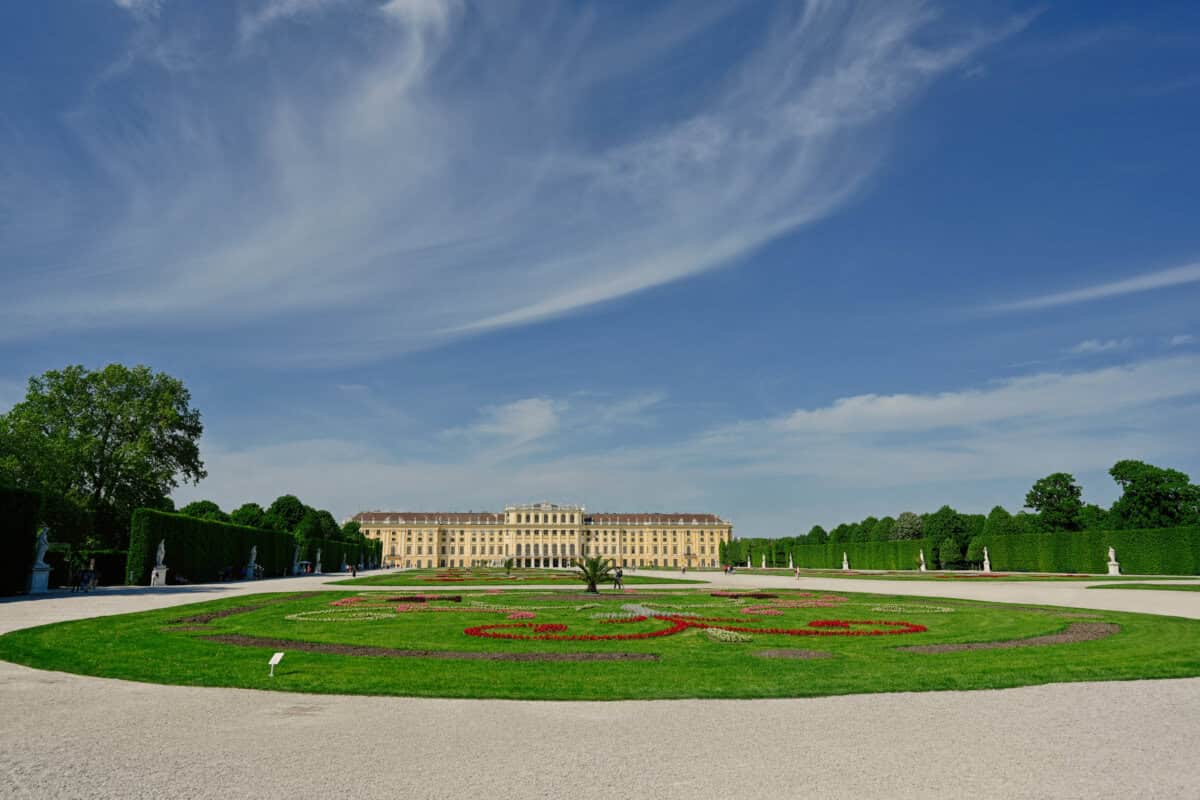
A short distance from the parterre is the Maze, one of the most beloved attractions for both adults and children. The maze has been completely restored and offers a fun pathway among tall hedges and interactive games, ideal for those who want to immerse themselves in a more playful adventure within the formal rigor of the Baroque garden.
Another must-see stop is the Neptune Fountain, a spectacular sculptural composition that completes the perspective of the Great Parterre. Dominating it is the sea god guiding his chariot through the waves; thus, the fountain is a masterpiece of Baroque theatricality and an important photo opportunity for visitors.
The Schönbrunn Gardens possess numerous hidden spaces, such as the Orangerie Garden, where exotic plants were once cultivated and which now hosts musical events and exhibitions. For those who love rare plants, the Prince’s Garden is worth a visit; it is ornamental, enclosed by a fence, with flowerbeds arranged with great aesthetic care and precision.
Also noteworthy is the unique attraction of the Palm House, a gigantic 19th-century iron and glass greenhouse that houses hundreds of botanical species from around the world. Adjacent to it is the Desert House, dedicated to desert flora, which is much more adaptable and less conspicuous, yet still fascinating.
To complete the visit, one must absolutely explore the quieter and more hidden paths, where nature takes over, offering rare peaceful corners away from the crowd. Thus, the Schönbrunn Gardens are not just a place to admire but a true adventure through lines of time, immersed in the beauty and culture of the landscape.
Schonbrunn Palace and Gardens: Skip The Line ticket and private guided tour
Schonbrunn Palace and Gardens: Admission + Guided tour
Vienna Tourist Pass
Booking Info
Opening Hours
Schönbrunn Palace is open to the public every day of the year, including holidays, making it a consistently accessible destination for visitors. The opening hours vary slightly depending on the season. Generally, during the winter hours (from November to March), the palace opens at 8:30 a.m. and closes at 5:30 p.m. In the spring and summer months, from April to October, closing time is extended to 6:30 p.m., providing more time for visits. Some areas, such as the gardens or secondary attractions (like the Gloriette or the maze), may have different hours, so it is always advisable to check for updates on the official website. Ticket counters usually close 45 minutes before the official closing time to allow visitors to complete their tour. The Carriage Museum and Schönbrunn Zoo also follow a specific schedule. It is helpful to purchase tickets in advance to avoid queues, especially during peak periods.
Location
Schönbrunn Palace is located in Vienna, the capital of Austria, in the quiet district of Hietzing, west of the city center. The exact address is Schönbrunner Schloßstraße 47, and it can easily be found on all tourist maps of the city. It is one of the most visited attractions in Europe, set within a vast green area featuring the palace, Baroque gardens, fountains, greenhouses, mazes, and a stunning view from the Gloriette hill. The area is well-served and tranquil, ideal for a day of exploration away from the hustle and bustle of the historic center while still being well-connected. Surrounding the palace are cafés, restaurants, and shops, as well as other secondary attractions like Schönbrunn Zoo, the oldest in Europe. Numerous entrances and excellent signage make access simple from any direction. The area is completely pedestrianized and perfect for relaxing walks before or after visiting the interiors.
How to Get There
Reaching Schönbrunn Palace is very easy thanks to Vienna’s efficient public transportation network. The quickest way is by subway: Line U4 connects the historic center directly to Schönbrunn in just a few minutes. Simply get off at the “Schönbrunn” stop and walk for about 5 minutes to the main entrance. Alternatively, several tram lines can be used, including numbers 10 and 60, which stop nearby. City buses also cover the area well, with lines 10A, 56A, and 56B being among the most frequent. For those arriving by car, there are paid parking spaces in the vicinity, although they can become crowded during peak tourist months. A taxi or shuttle service is also available from various points in the city. For those staying in Vienna for a few days, purchasing a Vienna City Card can facilitate travel and may include discounts for entry.
Best Time to Visit
Schönbrunn Palace is captivating at any time of year, but there are seasons that make the visit particularly enjoyable. Spring, from late March to May, is perhaps the ideal time: the gardens bloom with flowers, the weather is mild, and the longer days allow for a leisurely exploration of the entire complex. Autumn, especially in September and October, also offers a charming atmosphere with the warm colors of the leaves and still pleasant temperatures. Summer is perfect for those who want to take advantage of sunny days and attend events or concerts in the gardens, but one should be prepared for larger crowds. Winter, while colder, presents the charm of Christmas markets set up in the palace courtyard and a more peaceful visit to the interiors. Each season has its own appeal; the choice depends on whether one prefers lush greenery, a romantic atmosphere, or winter tranquility.
Duration of the Visit
The duration of a visit to Schönbrunn Palace can vary based on personal interests and the type of ticket purchased. To see just the imperial apartments and the main interiors of the palace, plan for about 1.5 to 2 hours. However, to experience a complete visit that includes the Baroque gardens, the Carriage Museum, the Gloriette, the maze, and the zoo, it is advisable to dedicate at least half a day. Many visitors prefer to spend the entire day there, alternating between cultural visits and relaxing moments in the park’s cafés. For those traveling with children, Schönbrunn Zoo is a must-see and can take 2 to 4 hours. Some combined tours also offer priority access and guided paths, which help optimize time. In any case, the advice is to take your time: Schönbrunn is a place rich in history, art, and nature that deserves to be discovered at a leisurely pace.
Accessibility
Schönbrunn Palace is largely accessible to individuals with reduced mobility, thanks to a series of measures and facilities designed to ensure a complete experience for everyone. The main interiors of the palace are equipped with elevators and ramps that allow visits to the imperial rooms without architectural barriers. The gardens, although some areas have gravel paths or slight inclines, are still navigable with strollers and walkers, especially along the main avenues. Accessible restrooms are available, as well as designated parking spaces near the entrance. Additionally, staff are trained to assist those in need. The castle’s official website provides detailed and updated information on the accessibility of each area, including the zoo, the Carriage Museum, and the Gloriette. Those requiring specific aids can also book additional services in advance, such as wheelchairs or accessible guided tours.
Location
Passes and Bundles
- BEST DEAL
Useful information for your visit
History
The Schönbrunn Gardens, located next to the majestic Schönbrunn Palace in Vienna, are an extraordinary example of Baroque gardening and a cultural heritage of invaluable value. Their creation began in 1695, under the reign of Emperor Leopold I, but they were expanded and transformed over the years by the Habsburg dynasty, particularly by Empress Maria Theresa, who sought to create a garden that reflected the power and grandeur of the monarchy.
Covering approximately 120 hectares, the gardens are characterized by a symmetrical layout and a variety of decorative elements. The main avenue, lined with trees and flowerbeds, leads to a series of wonders, including fountains, statues, and a maze. One of the most iconic attractions is the Gloriette, a neoclassical structure situated on a hill that offers a spectacular panoramic view of the palace and the gardens below.
The Schönbrunn Gardens were not only a place of aesthetic beauty but also an important leisure space for the imperial family. Social events, parties, and celebrations were held here. The various flowerbeds and themed gardens, such as the Rose Garden and the Aromatic Plants Garden, were designed to delight the senses and reflect the refined taste of the era.
After the fall of the Austro-Hungarian monarchy in 1918, the gardens were opened to the public, allowing everyone to enjoy their beauty. Today, the Schönbrunn Gardens are a popular destination for tourists and locals alike, who can explore the paths, admire the variety of flowers and plants, and enjoy moments of relaxation in this corner of paradise.
In 2011, the Schönbrunn Gardens were recognized as a UNESCO World Heritage Site, highlighting their historical and cultural significance. With their combination of natural and architectural beauty, the gardens continue to enchant visitors, offering a unique experience that celebrates imperial history and the genius of Baroque gardening.
Reviews
Luca B. from Florence, Italy
Clara T. from Sydney, Australia
Amir S. from Dubai, UAE
Sophie M. from Paris, France
Gallery
Tips
Arrive Early for the Best Experience
Want to enjoy the gardens without the hustle and bustle? Try to arrive right when they open! You’ll be greeted by the fresh morning air and have the chance to snap stunning photos of the flowers without crowds. Plus, the soft morning light makes for magical pictures!
Wear Comfy Shoes – You’ll Be Walking a Lot!
Get ready to stroll! The Giardini di Schönbrunn are vast and filled with beautiful paths to explore. Make sure to wear comfortable shoes, as you’ll be walking quite a bit. Your feet will thank you after a day of wandering through the stunning scenery!
Bring a Picnic for a Relaxing Break
Pack a picnic and find a cozy spot to relax! The gardens are the perfect place to unwind and enjoy a snack surrounded by nature. There are plenty of lovely benches and grassy areas to choose from. Just remember to take your trash with you to keep the gardens beautiful!
Don’t Miss the Gloriette for a Stunning View
Make sure to hike up to the Gloriette! It’s a short walk from the main garden area, and the panoramic views of the palace and Vienna are absolutely worth it. Bring your camera to capture the breathtaking scenery, and enjoy a moment to soak it all in!
Explore Beyond the Flowers
While the flowers are stunning, don’t forget to check out the other attractions in the gardens! Take some time to explore the fountains, statues, and even the maze. Each corner has something unique to offer, making your visit even more memorable. Happy exploring!