Unofficial Website
Unofficial Website

Botanical beauty meets imperial charm

Palmenhaus Vienna: Art Nouveau elegance, tropical nature and imperial history in the heart of the Austrian capital.

A place of eternal charm, where history and culture come together in perfect harmony. Walking through its pathways feels like diving into an elegant scene, among sumptuous palaces, historic cafés, and squares that narrate years of beauty and art. However, Vienna is primarily the City of Music. From the luxury of the Habsburg court to contemporary music, Austria’s capital has seen the birth and hosted the most famous figures in history, including Mozart, Beethoven, Schubert, Strauss, and Haydn. These musical giants worked in Vienna, leaving an indelible mark that has endured to this day in concert halls, streets, and avenues. Here are some attractions to visit.

At the heart of the Burggarten gardens lies the Palm House (Palmenhaus) of Vienna, one of the most elegant examples of glass and iron architecture from the imperial era. The first thing that strikes you is its elegance: a long, sinuous structure in Art Nouveau style, appearing as if it has come straight out of an illustrated book from the late 19th century. It is not merely a botanical greenhouse, but a true oasis of exoticism in the historic center of Vienna, where art, history, and nature embrace in harmony.

The Palm House was commissioned by Emperor Franz Joseph and completed in 1901, designed as a monumental greenhouse to house tropical plants from around the world. It is one of the largest Jugendstil-style greenhouses in Europe, measuring approximately 130 meters long and 28 meters high.

The visual impact is remarkable; the large curved glass panels allow generous amounts of light to enter, creating reflections that dance among the palm leaves and the metallic surfaces that define the entire structure.
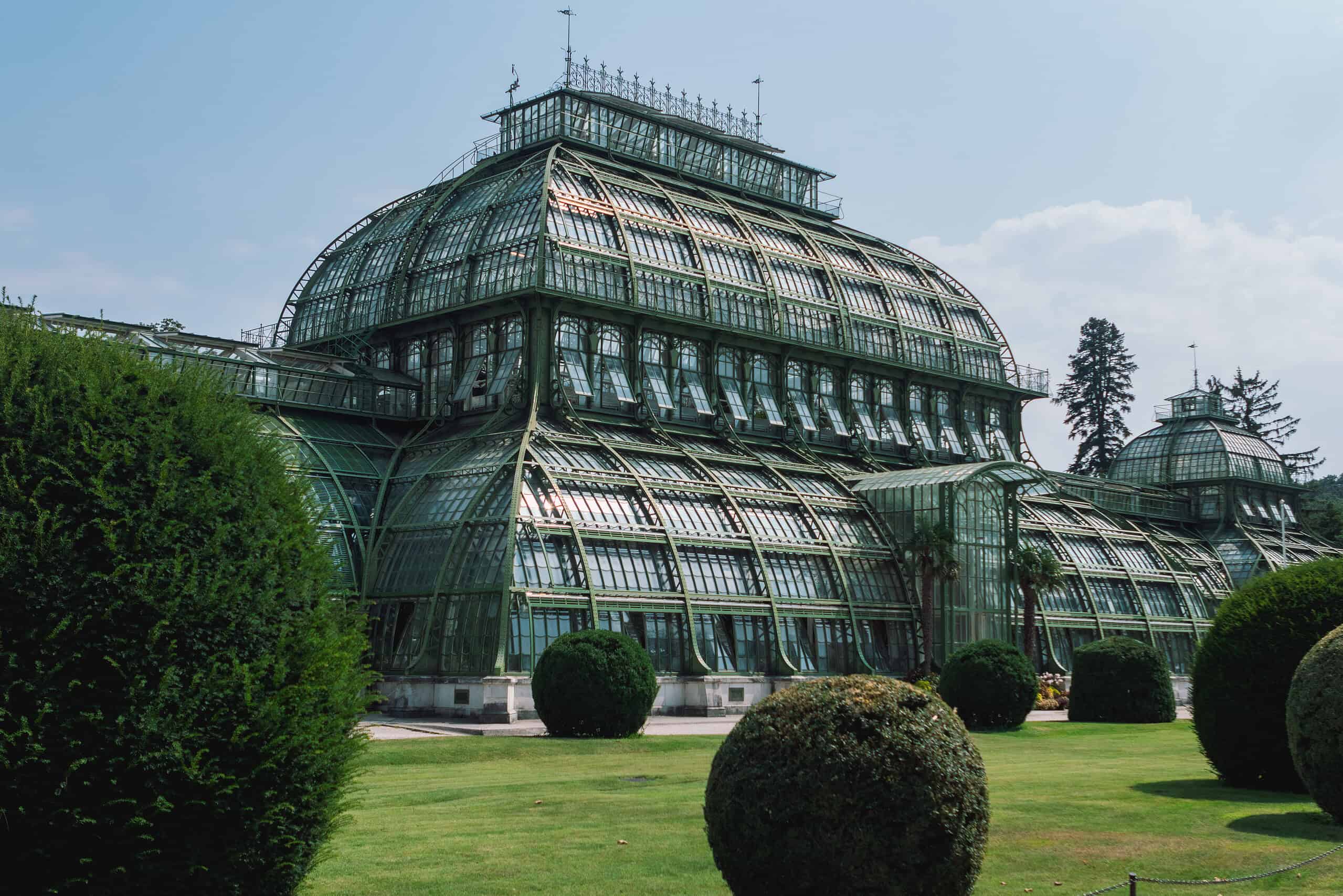
Vintage glass greenhouse with lush green surroundings.

Inside, the mild temperature and constant humidity promote the lush growth of numerous plants: from tall Caribbean palms to Asian ficus, as well as orchids, banana plants, prehistoric ferns, and brightly colored climbers. Walking among these plants is a unique sensory experience, filled with spicy aromas, muted sounds, and views that change with every step. The Palm House is not just a botanical refuge; part of it has been transformed into one of the most charming cafés in Vienna: Café Palmenhaus.

Amid wrought-iron tables and Art Nouveau-style chairs, visitors can enjoy a Viennese coffee or a glass of Grüner Veltliner surrounded by greenery, immersed in a rarefied and calm atmosphere, far from the urban chaos. It is a favored spot for both tourists and locals seeking an elegant pause.

In the eastern part of the structure, you will also find the Butterfly House, where hundreds of butterflies flutter freely in a perfectly recreated microclimate. This beloved stop adds a magical touch to the visit, especially for families.

Thus, the Palm House represents much more than just a botanical attraction: it is a visual, cultural, and sensory experience that tells a piece of Vienna’s imperial soul. A soul so special that it manages to enchant anyone who crosses the threshold of its gleaming glass treasure. This greenhouse becomes an adventure with an exotic atmosphere, where nature and history merge in harmony. It is not just a tourist stop but a journey through time, filled with wonder and authenticity.

SHOW MORE

Schönbrunn Palace and Gardens: Skip the Line Ticket + Guided Tour

Duration: 2h | Maximum number of persons: 30 | Guide-guide: German, English
https://www.tiqets.com/en/schonbrunn-palace-tickets-l145516/?partner=schonbrunn-palace.com

Schönbrunn Palace: Skip-the-line ticket + wine tasting

Duration: 2h | Audio guide: English, German | Fast-track access | Maximum number of persons: 25
https://www.tiqets.com/en/schonbrunn-palace-tickets-l145516/?partner=schonbrunn-palace.com

Schoenbrunn Palace: self-guided tour + concert at the Orangery

Duration: 5h
https://www.tiqets.com/en/schonbrunn-palace-tickets-l145516/?partner=schonbrunn-palace.com

Booking Info

Opening Hours

Schönbrunn Palace is open to the public every day of the year, including holidays, making it a consistently accessible destination for visitors. The opening hours vary slightly depending on the season. Generally, during the winter hours (from November to March), the palace opens at 8:30 a.m. and closes at 5:30 p.m. In the spring and summer months, from April to October, closing time is extended to 6:30 p.m., providing more time for visits. Some areas, such as the gardens or secondary attractions (like the Gloriette or the maze), may have different hours, so it is always advisable to check for updates on the official website. Ticket counters usually close 45 minutes before the official closing time to allow visitors to complete their tour. The Carriage Museum and Schönbrunn Zoo also follow a specific schedule. It is helpful to purchase tickets in advance to avoid queues, especially during peak periods.

Location

Schönbrunn Palace is located in Vienna, the capital of Austria, in the quiet district of Hietzing, west of the city center. The exact address is Schönbrunner Schloßstraße 47, and it can easily be found on all tourist maps of the city. It is one of the most visited attractions in Europe, set within a vast green area featuring the palace, Baroque gardens, fountains, greenhouses, mazes, and a stunning view from the Gloriette hill. The area is well-served and tranquil, ideal for a day of exploration away from the hustle and bustle of the historic center while still being well-connected. Surrounding the palace are cafés, restaurants, and shops, as well as other secondary attractions like Schönbrunn Zoo, the oldest in Europe. Numerous entrances and excellent signage make access simple from any direction. The area is completely pedestrianized and perfect for relaxing walks before or after visiting the interiors.

How to Get There

Reaching Schönbrunn Palace is very easy thanks to Vienna’s efficient public transportation network. The quickest way is by subway: Line U4 connects the historic center directly to Schönbrunn in just a few minutes. Simply get off at the “Schönbrunn” stop and walk for about 5 minutes to the main entrance. Alternatively, several tram lines can be used, including numbers 10 and 60, which stop nearby. City buses also cover the area well, with lines 10A, 56A, and 56B being among the most frequent. For those arriving by car, there are paid parking spaces in the vicinity, although they can become crowded during peak tourist months. A taxi or shuttle service is also available from various points in the city. For those staying in Vienna for a few days, purchasing a Vienna City Card can facilitate travel and may include discounts for entry.

Best Time to Visit

Schönbrunn Palace is captivating at any time of year, but there are seasons that make the visit particularly enjoyable. Spring, from late March to May, is perhaps the ideal time: the gardens bloom with flowers, the weather is mild, and the longer days allow for a leisurely exploration of the entire complex. Autumn, especially in September and October, also offers a charming atmosphere with the warm colors of the leaves and still pleasant temperatures. Summer is perfect for those who want to take advantage of sunny days and attend events or concerts in the gardens, but one should be prepared for larger crowds. Winter, while colder, presents the charm of Christmas markets set up in the palace courtyard and a more peaceful visit to the interiors. Each season has its own appeal; the choice depends on whether one prefers lush greenery, a romantic atmosphere, or winter tranquility.

Duration of the Visit

The duration of a visit to Schönbrunn Palace can vary based on personal interests and the type of ticket purchased. To see just the imperial apartments and the main interiors of the palace, plan for about 1.5 to 2 hours. However, to experience a complete visit that includes the Baroque gardens, the Carriage Museum, the Gloriette, the maze, and the zoo, it is advisable to dedicate at least half a day. Many visitors prefer to spend the entire day there, alternating between cultural visits and relaxing moments in the park’s cafés. For those traveling with children, Schönbrunn Zoo is a must-see and can take 2 to 4 hours. Some combined tours also offer priority access and guided paths, which help optimize time. In any case, the advice is to take your time: Schönbrunn is a place rich in history, art, and nature that deserves to be discovered at a leisurely pace.

Accessibility

Schönbrunn Palace is largely accessible to individuals with reduced mobility, thanks to a series of measures and facilities designed to ensure a complete experience for everyone. The main interiors of the palace are equipped with elevators and ramps that allow visits to the imperial rooms without architectural barriers. The gardens, although some areas have gravel paths or slight inclines, are still navigable with strollers and walkers, especially along the main avenues. Accessible restrooms are available, as well as designated parking spaces near the entrance. Additionally, staff are trained to assist those in need. The castle’s official website provides detailed and updated information on the accessibility of each area, including the zoo, the Carriage Museum, and the Gloriette. Those requiring specific aids can also book additional services in advance, such as wheelchairs or accessible guided tours.

SHOW MORE

Location

Useful information for your visit

Schoenbrunn Palace is open daily, including holidays. Hours vary seasonally: in winter (November-March) it opens at 8:30 a.m. and closes at 5:30 p.m., while in spring and summer (April-October) it closes at 6:30 p.m. Some areas, such as the gardens and secondary attractions, may have different hours, so it is advisable to check the official website. Ticket offices close 45 minutes before closing time. The Carriage Museum and Schönbrunn Zoo also follow specific timetables. It is advisable to buy your tickets in advance to avoid queues at peak times.
Schönbrunn Palace is located in Vienna, the capital of Austria, in the quiet district of Hietzing, west of the city center. The exact address is Schönbrunner Schloßstraße 47, and it can easily be found on all tourist maps of the city. It is one of the most visited attractions in Europe, set within a vast green area featuring the palace, Baroque gardens, fountains, greenhouses, mazes, and a stunning view from the Gloriette hill. The area is well-served and tranquil, ideal for a day of exploration away from the hustle and bustle of the historic center while still being well-connected. Surrounding the palace are cafés, restaurants, and shops, as well as other secondary attractions like Schönbrunn Zoo, the oldest in Europe. Numerous entrances and excellent signage make access simple from any direction. The area is completely pedestrianized and perfect for relaxing walks before or after visiting the interiors.
Reaching Schönbrunn Palace is very easy thanks to Vienna’s efficient public transportation network. The quickest way is by subway: Line U4 connects the historic center directly to Schönbrunn in just a few minutes. Simply get off at the “Schönbrunn” stop and walk for about 5 minutes to the main entrance. Alternatively, several tram lines can be used, including numbers 10 and 60, which stop nearby. City buses also cover the area well, with lines 10A, 56A, and 56B being among the most frequent. For those arriving by car, there are paid parking spaces in the vicinity, although they can become crowded during peak tourist months. A taxi or shuttle service is also available from various points in the city. For those staying in Vienna for a few days, purchasing a Vienna City Card can facilitate travel and may include discounts for entry.
Schönbrunn Palace is captivating at any time of year, but there are seasons that make the visit particularly enjoyable. Spring, from late March to May, is perhaps the ideal time: the gardens bloom with flowers, the weather is mild, and the longer days allow for a leisurely exploration of the entire complex. Autumn, especially in September and October, also offers a charming atmosphere with the warm colors of the leaves and still pleasant temperatures. Summer is perfect for those who want to take advantage of sunny days and attend events or concerts in the gardens, but one should be prepared for larger crowds. Winter, while colder, presents the charm of Christmas markets set up in the palace courtyard and a more peaceful visit to the interiors. Each season has its own appeal; the choice depends on whether one prefers lush greenery, a romantic atmosphere, or winter tranquility.
The duration of a visit to Schönbrunn Palace can vary based on personal interests and the type of ticket purchased. To see just the imperial apartments and the main interiors of the palace, plan for about 1.5 to 2 hours. However, to experience a complete visit that includes the Baroque gardens, the Carriage Museum, the Gloriette, the maze, and the zoo, it is advisable to dedicate at least half a day. Many visitors prefer to spend the entire day there, alternating between cultural visits and relaxing moments in the park’s cafés. For those traveling with children, Schönbrunn Zoo is a must-see and can take 2 to 4 hours. Some combined tours also offer priority access and guided paths, which help optimize time. In any case, the advice is to take your time: Schönbrunn is a place rich in history, art, and nature that deserves to be discovered at a leisurely pace.
Schoenbrunn Palace is largely accessible to people with reduced mobility, thanks to facilities such as lifts and ramps for visiting the imperial rooms. The gardens, although they have some areas with gravel or slopes, are passable with wheelchairs and walkers along the main avenues. Accessible toilets and reserved parking spaces are available. Staff are trained to offer assistance, and the official website provides detailed information on the accessibility of the various areas, including the zoo and the Carriage Museum. Specific aids such as wheelchairs and accessible guided tours can be booked in advance.

History

The Palm House, or Palmenhaus, is one of the most fascinating locations within the Schönbrunn Palace complex in Vienna. Built between 1882 and 1884, the Palm House is an extraordinary example of iron and glass architecture, designed by architect Franz Xaver Segenschmid. Its construction reflects the era’s interest in exoticism and botany, a theme that was very popular during the Austro-Hungarian Empire.

The greenhouse features an impressive structure that spans 1,200 square meters, with a dome shape and a design reminiscent of 19th-century English greenhouses. The Palm House houses a vast collection of tropical and subtropical plants, making it a true botanical paradise. Among the more well-known species are palms, succulents, ferns, and even rare plants from various parts of the world.

One of the most captivating aspects of the Palm House is its unique atmosphere. Visitors can stroll among the lush plants and enjoy a tropical climate, a true refuge from the hustle and bustle of city life. The greenhouse is divided into several sections, each with its own temperature and humidity, creating environments suitable for different plant species.

Over the years, the Palm House has become an important center for botanical research and plant conservation, contributing to the preservation of endangered species. In addition to its scientific function, the greenhouse is also a popular venue for events and exhibitions, attracting visitors from all over the world.

In recent years, restoration work has been undertaken to preserve the beauty of the Palm House and enhance the visitor experience. Today, the Palm House is open to the public and represents one of the most beloved attractions at Schönbrunn, where nature and botany enthusiasts can immerse themselves in a captivating environment and discover the richness of global flora.

The Palm House is not only a place of natural beauty but also a symbol of Austrian history and culture, uniting art, science, and nature in a single, wonderful experience.

Show more

Reviews

Gallery

Tips